⚠️ B2B / Commercial & Industrial Facilities Only — No Residential Requests
Southeast Commercial Services engineers and installs warehouse floor epoxy and industrial floor coating systems across the Atlanta metro area — including the I-85 and I-20 logistics corridors, Fulton Industrial Boulevard, and the Cumberland/Smyrna distribution hub. Our systems are specified to handle continuous forklift traffic, chemical exposure, and heavy operational loads while reducing floor maintenance costs and eliminating unplanned downtime.
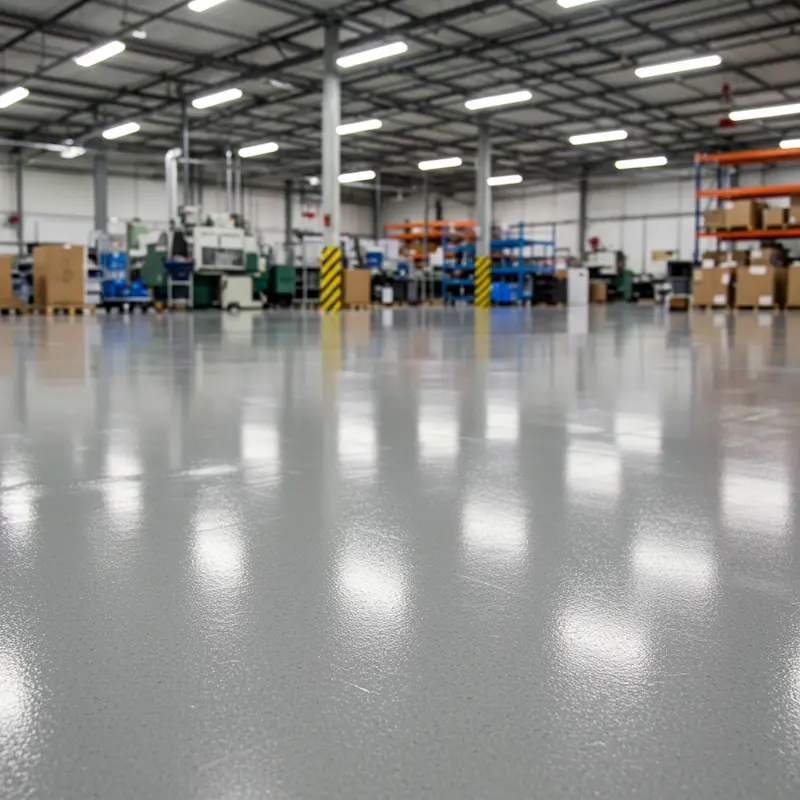
In a distribution center or manufacturing warehouse, the concrete slab isn't just a floor — it is the operating platform for every piece of material handling equipment, every racked pallet, and every employee on foot. An unprotected or under-specified warehouse floor is not a static problem. It degrades progressively, generating dust, surface defects, trip hazards, and equipment wear that compound daily into measurable operational and financial losses. A correctly engineered warehouse floor epoxy system is not a cosmetic upgrade — it is a infrastructure protection investment.

Concrete dusting is one of the most common and damaging conditions found in active Atlanta-area warehouses and distribution centers. It occurs when the concrete surface layer — the laitance — is structurally weak and breaks down under the repetitive point loads from electric counterbalance forklifts and reach truck tires. The result is a fine silicate powder that contaminates inventory, clogs HVAC and conveyor systems, and creates an ongoing OSHA-regulated respiratory hazard for employees. Airborne crystalline silica is classified as a known carcinogen under OSHA 29 CFR 1910.1053. A high-build warehouse floor epoxy coating mechanically bonds to the substrate and encapsulates the laitance, permanently eliminating the source of dust generation without the need for ongoing chemical hardener treatments.
Every warehouse slab is a grid of control joints designed to manage the concrete's natural shrinkage cracking. In a high-traffic warehouse, these joints are one of the most abused areas on the floor. Each pass of a loaded forklift — particularly at speeds exceeding 5 mph — creates a repetitive impact event at each joint edge. Over time, this breaks down the aggregate interlock, causing the joint edges to spall and chip. These deteriorated joints create three immediate problems: they accelerate wear on expensive cushion and polyurethane foam forklift tires, they create surface-level trip hazards that expose your facility to liability, and they allow liquid contaminants to penetrate below the slab surface. A complete warehouse floor coating program begins with professional joint repair using semi-rigid polyurea filler, which is matched to the slab's deflection characteristics before the epoxy system is applied.
The dock area, battery charging stations, and fluid transfer zones of any warehouse are points of chronic chemical exposure. Hydraulic oil, battery electrolyte (sulfuric acid), diesel residue from over-the-road trailers, and cleaning chemicals are all absorbed immediately into uncoated concrete. Battery acid, specifically, performs an aggressive chemical reaction with the calcium hydroxide in the concrete matrix, permanently softening and pitting the surface. Beyond the structural damage, contaminated concrete near dock doors creates a slip hazard during wet weather and makes routine floor cleaning ineffective. A chemical-resistant epoxy floor coating applied to these zones creates an impervious membrane that can be cleaned efficiently with standard industrial sweep-and-mop protocols, protecting the structural slab below and reducing slip-and-fall risk at the busiest entry points in your facility.
Facility managers and operations directors who defer warehouse floor coating work rarely save money — they transfer costs to other line items that are harder to trace back to the floor. Consider the full "deferred maintenance cost stack" specific to warehousing: First, there is accelerated forklift tire wear — a single deteriorated warehouse floor with rough concrete and damaged joints can reduce cushion tire life by 30–40%, adding thousands of dollars per year per unit of MHE to your maintenance budget. Second, increased housekeeping labor — dusty, porous concrete requires more frequent and intensive cleaning to meet basic hygiene and inventory protection standards. Third, OSHA citation risk — silica dust exposure and unmarked pedestrian walkways in forklift zones are two of OSHA's most frequently cited warehouse violations (29 CFR 1910.178). Finally, there is facility reputation — warehouses used for 3PL, food-grade, or pharmaceutical distribution are subject to client audits where floor condition is a documented evaluation criterion. A professionally installed warehouse floor epoxy system eliminates all four of these cost drivers simultaneously.

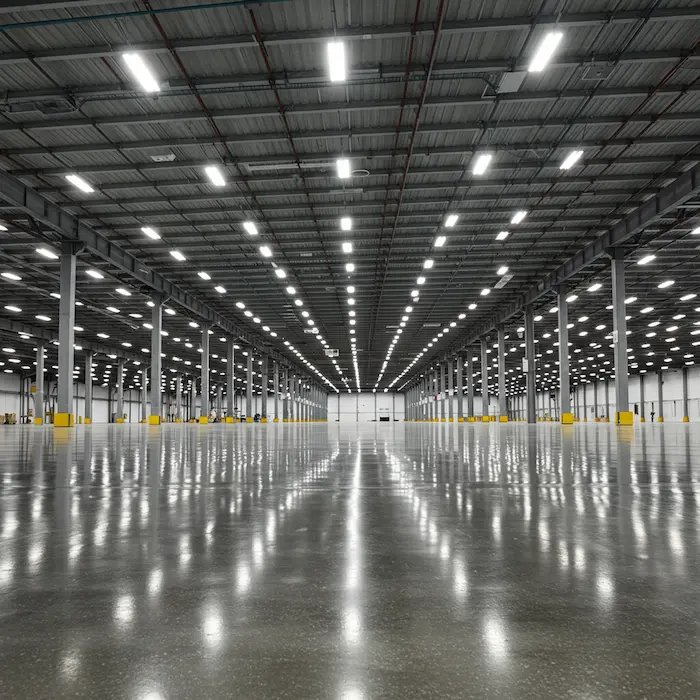

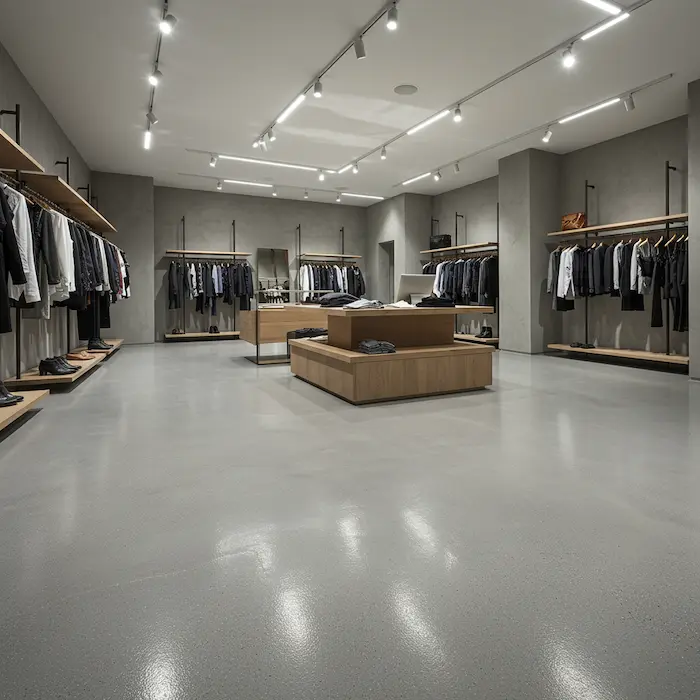
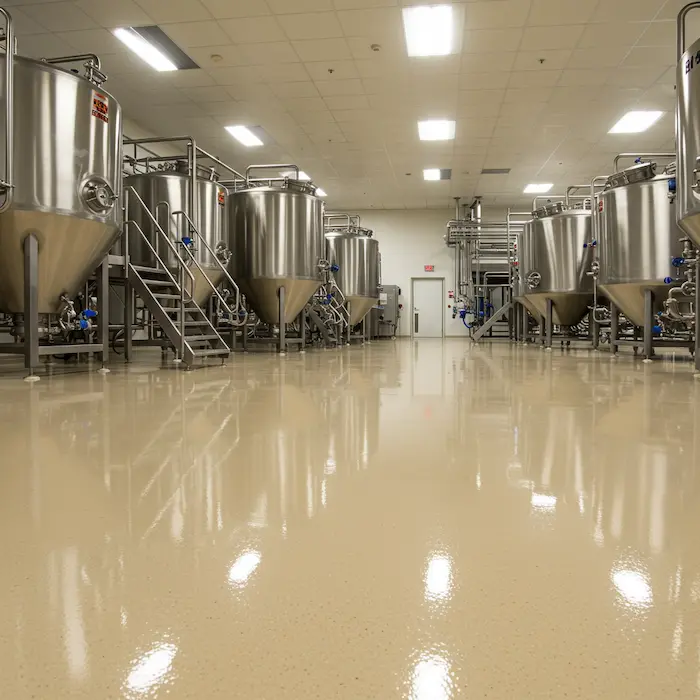
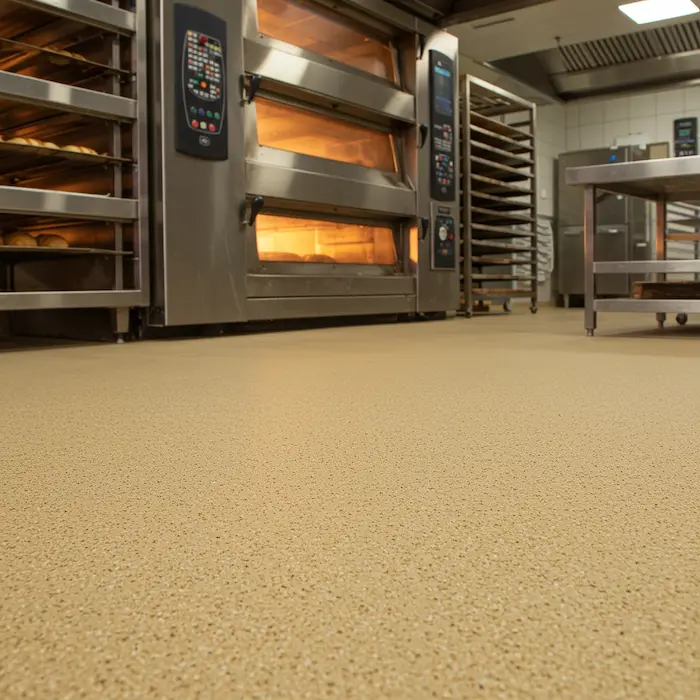
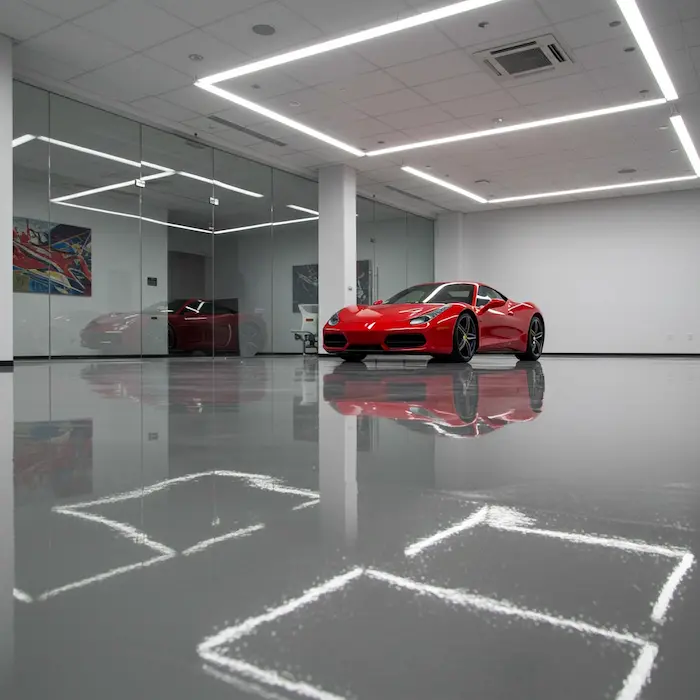


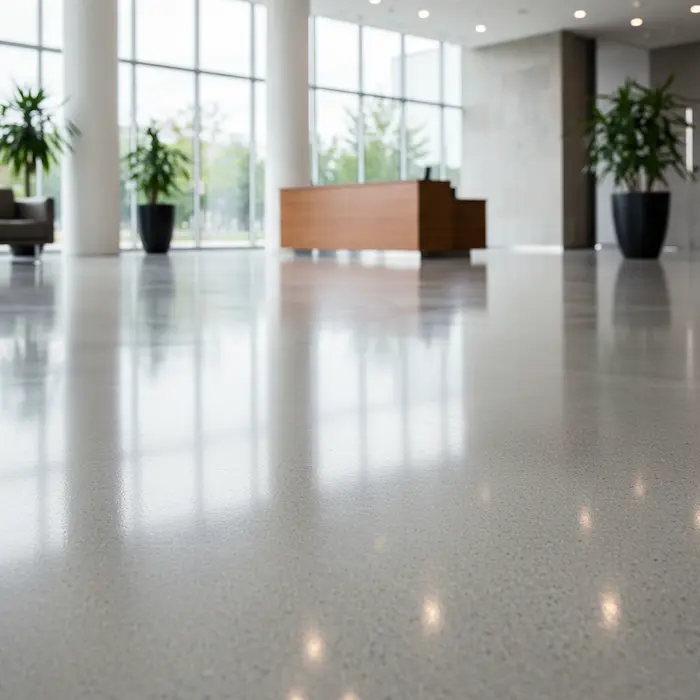
Selecting a warehouse floor epoxy contractor in the Atlanta market is a long-term infrastructure decision. The wrong choice results in delamination, failure, and a re-coat within 24 months. Our methodology is built around eliminating that risk through process rigor, technical specification, and project execution that matches the operational demands of active, high-throughput warehouse facilities.
No two warehouses have the same flooring requirements. A 400,000 sq. ft. ambient-temperature distribution center on Fulton Industrial Boulevard has fundamentally different demands than a 50,000 sq. ft. cold-storage facility in the Cumberland district. Our pre-project site assessment documents your MHE fleet types and axle loads, operational temperature ranges, chemical exposure zones, traffic lanes, and rack anchor locations. This diagnostic forms the technical basis for a system specification — not a generic product selection from a contractor's preferred supplier list.
Surface preparation is not a line item we compress to lower a bid. It is 90% of a successful warehouse floor coating outcome. For every warehouse project, we perform mechanical surface preparation using captive shot blast equipment, achieving a minimum ICRI CSP 3–4 concrete surface profile — the industry standard required for high-build epoxy adhesion in heavy-traffic environments. All shot blast equipment is integrated with HEPA-filtered vacuum recovery systems to contain silica dust and meet OSHA 29 CFR 1910.1053 silica exposure standards. Facilities that have previously received thin-film "paint" coatings that peeled require complete removal of the existing failed system prior to recoat — a critical step many budget contractors skip.
Our project managers are trained in the practical chemistry of industrial floor coating systems. This allows us to specify the right technology for your environment: 100% Solids Epoxy for high-build, high-traffic warehouse aisles; Aliphatic Polyurethane Topcoats for UV-stable, abrasion-resistant finish layers in areas with skylights or dock-door daylight; Novolac Epoxy for chemical containment and battery acid zones; and Polyurethane Cement (Urethane Screed) for areas subject to wash-down thermal shock or freezer-to-ambient transition zones. We do not upcharge for system upgrades — we specify what the environment requires.
We have never shut down an entire Atlanta-area warehouse to complete a floor coating project. Our project management process is built around detailed phase maps that allow your operation to continue in unaffected zones while we work aisle-by-aisle or zone-by-zone. We work nights, weekends, and around planned inventory cycle counts and maintenance shutdowns. Our containment protocols — including high-tack poly barriers, zipper-door access panels, and negative-air dust control — protect your racked inventory, conveyor systems, and workforce from the active work zone throughout the project. See how we phase an epoxy install around live warehouse operations →
Southeast Commercial Services engineers and installs multi-layer warehouse floor coating systems across the Atlanta metro area. Each system is specified to the performance demands of your facility's operational environment — not selected from a standard menu.
This is the primary system for large-format warehouse floors with continuous forklift and pallet jack traffic. It is a multi-layer, 100% solids epoxy system applied at a total dry film thickness (DFT) of 30–50 mils. The build sequence begins with a low-viscosity penetrating primer designed to chemically anchor to the concrete substrate, followed by one or two pigmented build coats, and finished with an aliphatic polyurethane or epoxy topcoat for maximum abrasion resistance and cleanability. This system is the standard specification for forklift aisles, staging zones, dock leveler aprons, and bulk storage areas in Atlanta's I-85 Corridor and Hartsfield-Jackson adjacent distribution facilities.
An aliphatic polyurethane topcoat applied over a properly prepared epoxy base coat dramatically extends the service life of a warehouse floor coating by providing a UV-stable, scratch-resistant surface that maintains its gloss and color even under constant wheel traffic. Unlike standard epoxy topcoats, which amber under UV exposure from dock doors and skylights, aliphatic urethane topcoats are color-stable and maintain OSHA safety line visibility over their full service life. This system is specified wherever this system is specified wherever dock doors, skylights, or overhead glazing introduce UV exposure to the warehouse floor surface.
For battery charging stations, acid containment areas, and chemical transfer pads within a warehouse facility, a standard bisphenol-A epoxy is not sufficient. We specify novolac epoxy floor coating systems, which feature a higher cross-link density molecular structure providing resistance to sulfuric acid concentrations up to 98%, industrial solvents, and caustic cleaning agents. Novolac systems are commonly specified for the battery room, wash-down bays, and secondary containment berms in Atlanta-area distribution centers and manufacturing warehouses where electric forklift fleets are the primary MHE.
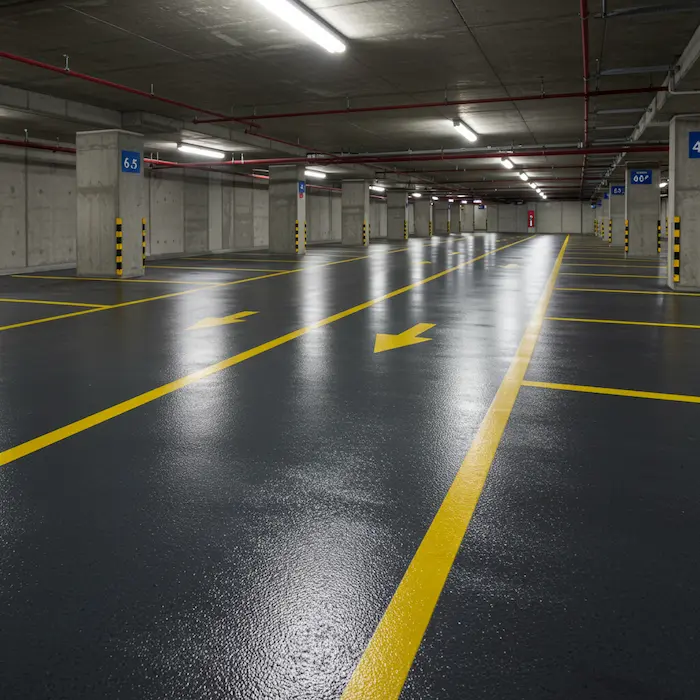
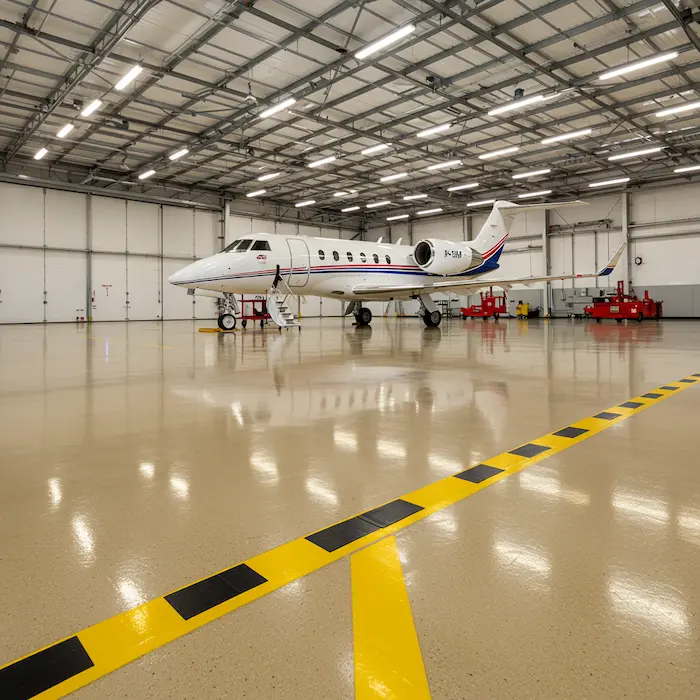
OSHA 29 CFR 1910.178(n) requires clearly marked traffic lanes in warehouses where powered industrial trucks operate in areas where employees may also be on foot. Tape and topical traffic paint fail within months under forklift tire scrubbing. Our process embeds OSHA-compliant warehouse floor safety lines — pedestrian walkways, forklift aisles, dock staging zones, rack exclusion zones, and emergency egress paths — directly within the epoxy floor system. Buried between the build coat and topcoat, these markings are mechanically bonded to the floor and will outlast the surface life of the coating. Line widths, colors (OSHA yellow, white, red, blue), and layouts are coordinated with your safety team and warehouse layout plan prior to installation.
In cold storage warehouses and facilities with freezer-to-ambient dock transition zones, standard rigid epoxy systems will crack and delaminate due to the differential thermal expansion and contraction between the coating and the concrete slab. For these environments, we specify a polyurethane cement floor system — a hybrid material that combines the chemical resistance of epoxy with the flexibility of urethane. Polyurethane cement maintains adhesion and integrity across temperature ranges from -40°F to +250°F, making it the only technically appropriate system for freezer vestibules, cooler transition areas, and hot-water wash-down zones in Atlanta-area food-grade warehouse and distribution facilities.

We understand that in a warehouse or distribution center, every hour of floor downtime is a direct hit to throughput. Our project management process is built around a single objective: complete the floor coating project with zero impact on your shipping, receiving, and pick/pack operations. We develop a detailed zone-by-zone phase plan before a single piece of equipment is mobilized to your facility. For a large-format Atlanta distribution center, this typically means completing primary forklift travel aisles over a weekend shutdown, then progressing through staging and dock areas during off-shift hours. We use high-tack poly containment barriers, zipper-door access panels, and negative-air HEPA filtration units to fully isolate the active work zone from your live operation — protecting your racked inventory, WMS scanning equipment, and personnel throughout the project. Our crews are trained and equipped to work second and third shifts, weekends, and around scheduled inventory cycle counts and WMS blackout periods.
This is one of the most misunderstood specifications in warehouse floor coatings. A thin-film epoxy "sealer" applied at 4–8 mils DFT has no meaningful compressive strength and will be destroyed by forklift traffic within months. For a warehouse environment with counterbalance forklifts (electric or LP), reach trucks, or order pickers, the minimum effective system thickness is 20–30 mils DFT for moderate traffic, and 30–50 mils DFT for primary travel aisles and dock areas with continuous heavy loads. Our high-build 100% solids epoxy systems are applied in multiple coats to achieve the specified thickness, verified at each stage with a wet film gauge and confirmed post-cure with a dry film thickness (DFT) meter. This is a documented quality control step, not an estimate.
No — and any contractor who says yes without conducting an adhesion pull test is not acting in your interest. A failed or delaminating existing coating is a symptom of a bond failure at the coating-to-concrete interface. Applying a new coating over a failed existing system simply adds a new layer on top of an unstable foundation. The correct process is complete mechanical removal of all failed coating using shot blast or diamond grinding equipment, down to bare, sound concrete. Only after a fresh, profiled substrate is confirmed can the new system be properly specified and installed. We assess the condition and adhesion of existing coatings during our initial site visit and will never price a recoat over a substrate that requires full removal.
Return-to-service timelines depend on the specific system installed and the ambient temperature and humidity conditions at your facility. As a general guideline: foot traffic is typically permitted at 12–24 hours after final topcoat application. Light forklift traffic (electric pallet jacks, walkie riders) can typically return at 48–72 hours. Full heavy forklift traffic — counterbalance forklifts and reach trucks at operating load — should not be permitted until 5–7 days of full cure at 70°F+. Cold warehouses or facilities with low ambient temperatures require extended cure times and may require temporary heating. We provide a written return-to-service schedule specific to your system and project conditions as part of every project closeout package.
Yes — phased installation is our standard approach for active Atlanta warehouse facilities. We develop a detailed zone map before mobilization that identifies primary travel aisles, staging areas, dock aprons, and storage zones, then sequence the work to keep your critical operational areas available while each phase cures. For a 200,000+ sq. ft. distribution center, a well-planned phased approach typically requires 2–4 weekend shutdowns per zone rather than a single week-long facility closure. We coordinate directly with your operations team, safety manager, and WMS administrator to align the phase schedule with your shipping calendar and inventory cycle.
OSHA 29 CFR 1910.22 requires that walking and working surfaces be "kept clean and, to the extent possible, dry" and that surfaces with slip hazards be corrected. The ANSI/NFSI B101.1 standard defines a "high traction" surface as having a Static Coefficient of Friction (SCOF) of 0.6 or greater. We engineer the final texture and slip resistance of every warehouse floor coating by broadcasting specific aggregate materials — aluminum oxide, silica sand, or polymer grit — into the wet topcoat at controlled broadcast rates to achieve a measurable, specified SCOF. For wet dock areas, wash-down zones, and pedestrian crossings within forklift traffic lanes, we specify a more aggressive texture profile. Final slip resistance can be verified post-installation using a ANSI/NFSI-calibrated tribometer as part of your facility's slip-and-fall prevention documentation.
Yes. OSHA's final rule on respirable crystalline silica (29 CFR 1910.1053) establishes a Permissible Exposure Limit (PEL) of 50 μg/m³ averaged over an 8-hour shift. Shot blasting and concrete grinding during warehouse floor preparation are Class D and Class E Table 1 tasks under this standard, requiring HEPA-filtered vacuum collection integrated directly with the preparation equipment — which is exactly how we operate. Our preparation equipment is not connected to open shop vacuums or dust collectors without HEPA filtration. We do not dry-sweep blasted concrete. Our project supervisor maintains an exposure control plan for every warehouse project, and we can provide documentation of our silica safety protocols to your EHS manager upon request prior to project commencement.
A correctly specified, properly surface-prepared, and professionally installed high-build warehouse floor epoxy system should deliver a service life of 7–12 years in a high-traffic distribution center environment, and 10–15+ years in a moderate-traffic manufacturing or storage facility. The primary variables that determine service life are: (1) the total dry film thickness of the installed system, (2) the quality of surface preparation — specifically the concrete surface profile achieved during shot blasting, (3) the type and weight of MHE operating on the floor, and (4) the adherence to a proper maintenance protocol. Floors that receive an annual or bi-annual sacrificial topcoat reapplication can extend this service life significantly and defer the cost of a full system replacement.
The single most damaging thing to a warehouse epoxy floor's long-term finish is abrasive grit — sand, concrete particulate, and dirt tracked in from dock doors and employee footwear. This grit acts as sandpaper under forklift and pallet jack tires. A proper maintenance program is straightforward: daily auto-scrubbing or sweeping to remove grit before it can abrade the surface; weekly wet mopping with a pH-neutral cleaner (avoid citrus-based, highly alkaline, or solvent-containing degreasers, which degrade the topcoat chemistry over time); immediate cleanup of all fluid spills, particularly battery acid and hydraulic oil; and periodic inspection of control joints and dock apron transitions for edge chip development. We provide a written warehouse floor maintenance protocol with every completed project so your facility and housekeeping teams have a clear, documented standard to follow.
We coordinate directly with your racking contractor or in-house maintenance team on rack relocation sequencing as part of our phased project plan. Anchor bolt holes left from relocated or removed rack are repaired as part of our standard surface preparation and crack/joint repair scope using semi-rigid polyurea or rigid epoxy mortar filler, depending on location and load requirements. We do not perform structural racking installation or recertification — that remains the responsibility of your racking contractor — but we will align our installation phases with the rack move schedule to minimize the number of full rack relocations required during the project.
Our warehouse floor coating projects are scoped for commercial and industrial facilities. We are equipped and staffed for projects ranging from targeted zone repairs (dock aprons, battery rooms, specific aisle remediation) starting at approximately 2,000 sq. ft., to full-facility re-coats of 500,000+ sq. ft. distribution centers. We do not service residential garage floors or small-scale decorative projects. Our client base consists entirely of facility managers, operations directors, property managers, and general contractors managing commercial and industrial assets in the Atlanta metropolitan area.
All warehouse floor projects executed under strict OSHA 29 CFR 1910 compliance protocols for active industrial environments.
Installation teams certified by leading industrial floor coating manufacturers to ensure warranty-compliant system application.
Comprehensive general liability and workers' compensation insurance carried on all Atlanta-area warehouse floor coating projects.
Meaningful written warranties covering both materials and workmanship provided with every completed warehouse floor project.
⚠️ Commercial & Industrial Facilities Only — No Residential Garage Floors
If your Atlanta-area warehouse floor is dusting, deteriorating at control joints, failing at dock transitions, or carrying a previous coating that is peeling — the time to act is before the next forklift season compounds the damage further. Contact Southeast Commercial Services to schedule a technical site assessment. Our warehouse flooring specialist will evaluate your current floor condition, document your operational requirements, and deliver a written system specification and phased project plan engineered for your facility — with no obligation and no sales pressure. We serve distribution centers, manufacturing plants, and logistics facilities across Atlanta, Fulton Industrial, Smyrna, Norcross, Peachtree City, and the full I-85 / I-20 Corridor.
(470) 458-2322 — Call Now Request a Site AssessmentCommercial & Industrial Facilities Only — No Residential Garage Floors
We provide a comprehensive warehouse floor epoxy consultation and detailed project quote that covers every measurable requirement of your facility — system thickness, surface preparation scope, control joint repair, OSHA safety line layout, and phased installation scheduling. Our professional estimators ensure your project is scoped for long-term durability and total cost of ownership, not just the lowest day-one price.
With over 30 years of Atlanta warehouse and industrial project history, Southeast Commercial Services delivers a seamless experience for facility managers, operations directors, and property managers. We specialize in high-traffic warehouse environments where operational uptime, OSHA compliance, and forklift-grade durability are non-negotiable — and where a failed floor coating is never an acceptable outcome.
Whether you need a warehouse floor epoxy system for a single distribution center aisle or a multi-phase full-facility installation across 500,000+ sq. ft., our team engineers and installs solutions that meet strict safety standards, MHE load requirements, and the long-term performance expectations of Atlanta's most demanding industrial operators.
Call us now to schedule a free on-site floor assessment and system quote
Click to Call & Schedule Your Warehouse Floor Assessment & Quote
Serving the entire Metro Atlanta area including Buckhead, Midtown, Fulton Industrial Blvd, and the I-85 NE Corridor.
Need a quote for a commercial or industrial painting project? Reach out today and tell us what you need.
We work with offices, warehouses, industrial facilities, high-rise buildings, retail properties, and commercial sites throughout Greater Atlanta.
Use the form below and a team member will follow up.