
⚠️ B2B / Commercial & Industrial Facilities Only — No Residential Requests
Southeast Commercial Services • Published July 11, 2026 • Atlanta, GA
Yes. A warehouse floor can be coated without shutting the building down — the work is phased zone-by-zone around your production schedule, with night and weekend shifts absorbing the disruptive stages, and fast-cure polyaspartic coatings can compress the timeline further where a section has to be back in service quickly. The tradeoff is that keeping the building running lengthens the total project and costs more than coating a vacant slab; for most facilities, that premium is far cheaper than the lost production of a full shutdown.
Below is how an occupied-facility install actually works, what it does to your timeline, and what you'll need to have ready before the crew arrives.
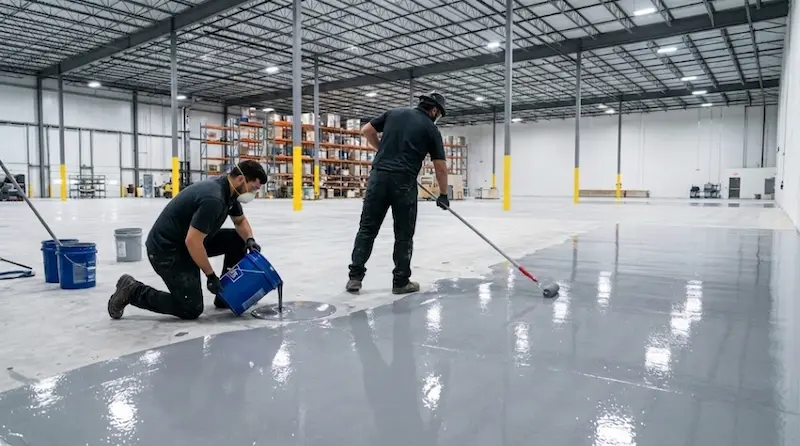
When an FM asks "how long will we be down," they're rarely asking about the floor. They're asking whether shipments go out on time, whether forklift lanes stay open, and whether a crew shot-blasting one bay is going to dust the racked inventory two aisles over.
The real fears are specific:
A contractor who's done this in occupied facilities plans around all four before the first zone is touched. The point of a phased approach isn't just to get the floor down — it's to make sure your operation never notices more than one zone is out at a time.
Yes, and it's the standard approach for active distribution and manufacturing space. There are two levers that make it possible: phasing (only a fraction of the floor is out of service at any moment) and cure speed (how fast a coated zone can carry foot traffic, then forklift traffic, then racking again).
Phasing controls where the disruption happens. Cure speed controls how long it lasts. A well-run occupied install works both at once — sectioning the floor so production keeps moving, and choosing a coating system whose cure window fits the gap you actually have.
For context on the systems and use cases this applies to, see our warehouse floor epoxy and Atlanta industrial floor coatings pages.
The floor gets divided into zones mapped to how you actually use the building — dock aisles, pick modules, staging lanes, battery-charging areas, cold zones. The crew works one zone while the rest of the warehouse runs normally, then rotates.
Here's what keeps the active work from bleeding into your operation:
Be clear-eyed about the tradeoff: phasing lengthens the total project and adds cost versus coating an empty slab. Containment setup and teardown, off-hours labor, and the slower zone-by-zone rhythm all add up. Industry-wide, an occupied phased install commonly runs on the order of 25–40% more than a vacant-slab install of the same square footage. What you're buying with that premium is continued production — which, for most facilities, dwarfs the added coating cost.
Notably, SECOMM has never had to shut an entire Atlanta-area warehouse down to complete a floor. The work is done aisle-by-aisle, on nights and weekends, and around planned inventory cycle counts and maintenance shutdowns.
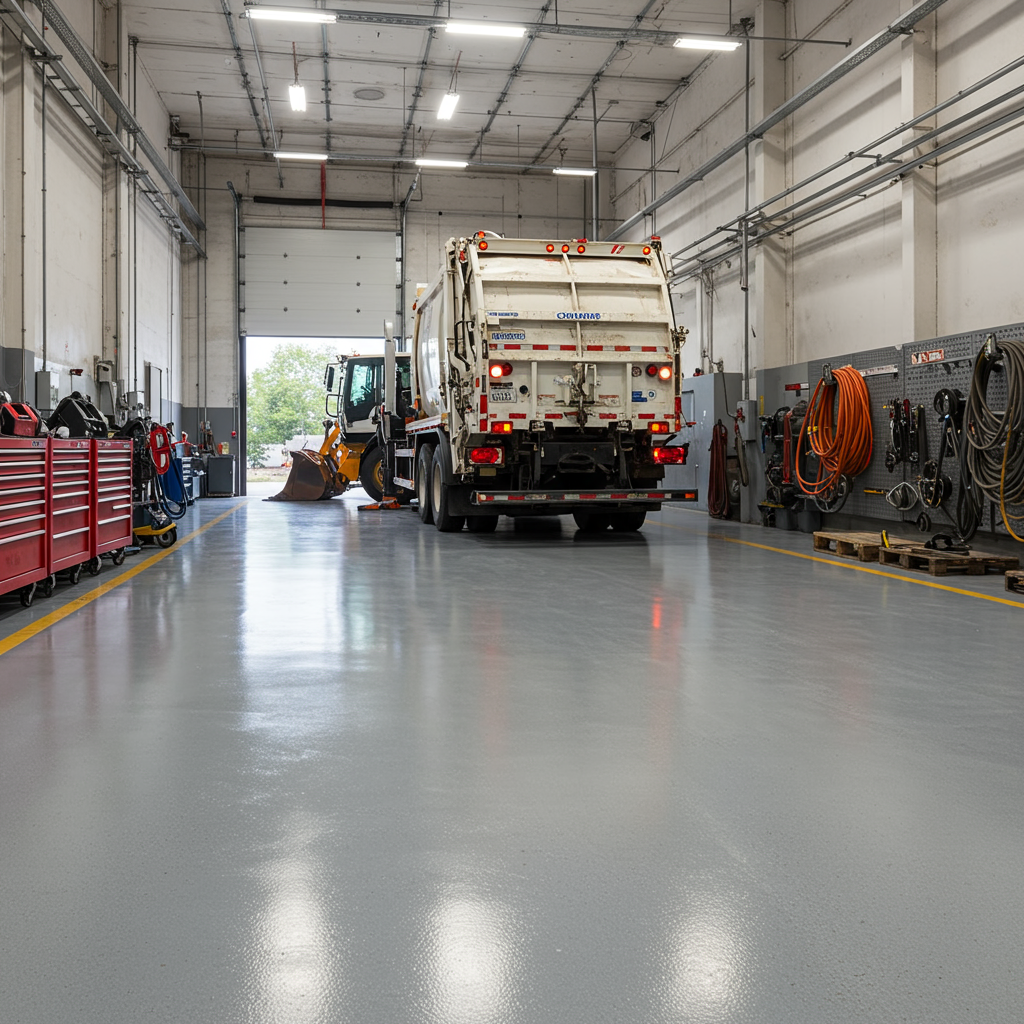
The coating system you choose sets how long each zone is out of service. This is the single biggest lever on downtime after phasing.
| System type | Light foot traffic | Full cure / racking & forklift | Best when |
|---|---|---|---|
| Standard high-build epoxy | ~24–72 hours | ~5–7 days | Timeline has room; large zones; off-shift or weekend windows available |
| Polyaspartic (fast-cure) | Hours to ~24 hours | ~24 hours (system-dependent) | A zone must return to service fast; tight overnight or single-shift windows |
Cure figures above are industry ranges. Actual cure depends on the specific system, film thickness, slab temperature, and humidity — they are not a fixed guarantee.
Standard 100% solids high-build epoxy (typically 30–50 mils) is the workhorse for warehouse floors — durable, chemical-resistant, and cost-effective when you have off-hours or weekend windows to let a zone cure. SECOMM installs polyaspartic fast-cure coatings that return a floor to service in hours rather than days — the right call when a zone simply can't be offline overnight.
Which one fits depends on the zone's role and the window you have. A low-traffic storage bay tolerates a longer cure; a primary dock aisle that has to carry forklifts by the next shift is a fast-cure candidate. A good contractor mixes systems across the floor — standard epoxy where you have time, polyaspartic fast-cure where you don't.
Every occupied job is scheduled to the facility, so treat this as a representative shape, not a quote. A phased install generally moves like this, one zone at a time:
Total calendar time depends on square footage, the number of zones, how many off-shift windows you can offer, and the cure speed of the systems chosen. A facility that can hand over full weekends and use fast-cure on critical aisles finishes far faster than one limited to a few overnight hours a week. The honest answer to "how long" comes out of the preconstruction walk — anyone quoting a firm number before seeing your floor and your schedule is guessing.
The scheduling is where an occupied install succeeds or fails. The floor work is routine; keeping your operation uninterrupted is the hard part, and it's planned deliberately:
Serving the Atlanta metro since 1991, SECOMM has done this across the I-85 and I-20 logistics corridors, Fulton Industrial Blvd, Cumberland/Smyrna, and Hartsfield-adjacent distribution — occupied buildings that couldn't afford to stop.
The smoother your prep, the shorter each zone is out. Before the crew shows up, have this ready:
Different zones may call for different systems — novolac epoxy in battery or chemical areas, polyurethane cement in freezer or thermal-shock zones, aliphatic polyurethane topcoats where UV or abrasion is a factor. Knowing which zones do what helps the phase map and the system selection line up. See our Atlanta commercial floor epoxy and commercial garage epoxy floor coatings pages for how systems match to use case.
The whole warehouse is never down — only one zone at a time. An individual zone is out of service for its cure window: roughly 24–72 hours for light traffic and about 5–7 days for full racking and forklift use with standard epoxy, or as little as hours to ~24 hours with fast-cure systems. Total project length depends on square footage, zone count, and how many off-shift windows you can offer.
Yes. Nights, weekends, and planned shutdown windows are the standard way disruptive stages get done in an occupied facility. It stretches the calendar compared to working straight through, but it keeps daytime production untouched.
No. The floor is sectioned into zones, and the crew works one zone while the rest of the building runs. SECOMM has never shut an entire Atlanta-area warehouse down to complete a floor — the work is done aisle-by-aisle with containment sealing the active zone off from live operations.
It depends on the zone. For a primary dock aisle or pick lane that has to carry forklifts by the next shift, the faster return to service usually justifies the premium. For a low-traffic storage bay with a weekend window to spare, standard epoxy does the job for less. A good phase plan uses polyaspartic fast-cure only where the schedule demands it.
Yes. Containment, off-hours labor, and the slower zone-by-zone rhythm add cost versus a vacant-slab install — commonly on the order of 25–40% more industry-wide. For most facilities that premium is small next to the cost of halting production.
⚠️ Commercial & Industrial Facilities Only — No Residential Garage Floors
The only honest way to scope an occupied floor is to walk it — see the slab, the traffic, and your operating calendar. Request a preconstruction walkthrough and phased-installation estimate, and we'll map the zones, the systems, and the off-shift windows around your schedule. See our warehouse floor epoxy work, or call to set up a walkthrough. Commercial and industrial facilities only.
Request a Walkthrough & Estimate (470) 458-2322 — Call Now